
Before entering my Master’s program in Curriculum and Instruction in my early 20’s, I completed a degree in Ethnic Studies and was part of the first graduating class in Ethnic Studies at the University of Oregon. My undergraduate degree had radically changed my understanding of U.S. history and U.S. society so, when a professor in the teaching college introduced me to Paulo Friere’s Pedagogy of the Oppressed, it became central to how I saw my role as an educator. I strongly saw education as a path to liberation, and not just the liberation of the individual, but liberation and systemic change for society as a whole. As a young teacher, I saw myself as the co-creator of meaning alongside my students and not simply as an authority figure at the front of the room-the only one able to impart knowledge.
Pedogogy of the Oppressed shaped my entire philosophy of teaching more than anything else I had read or learned. After many years of working in public education, I continued to believe in the philosophy described in Friere’s work, but it became more distant for me, clouded by the bureaucracy and day to day struggles of teaching within a system pushed to its limit.
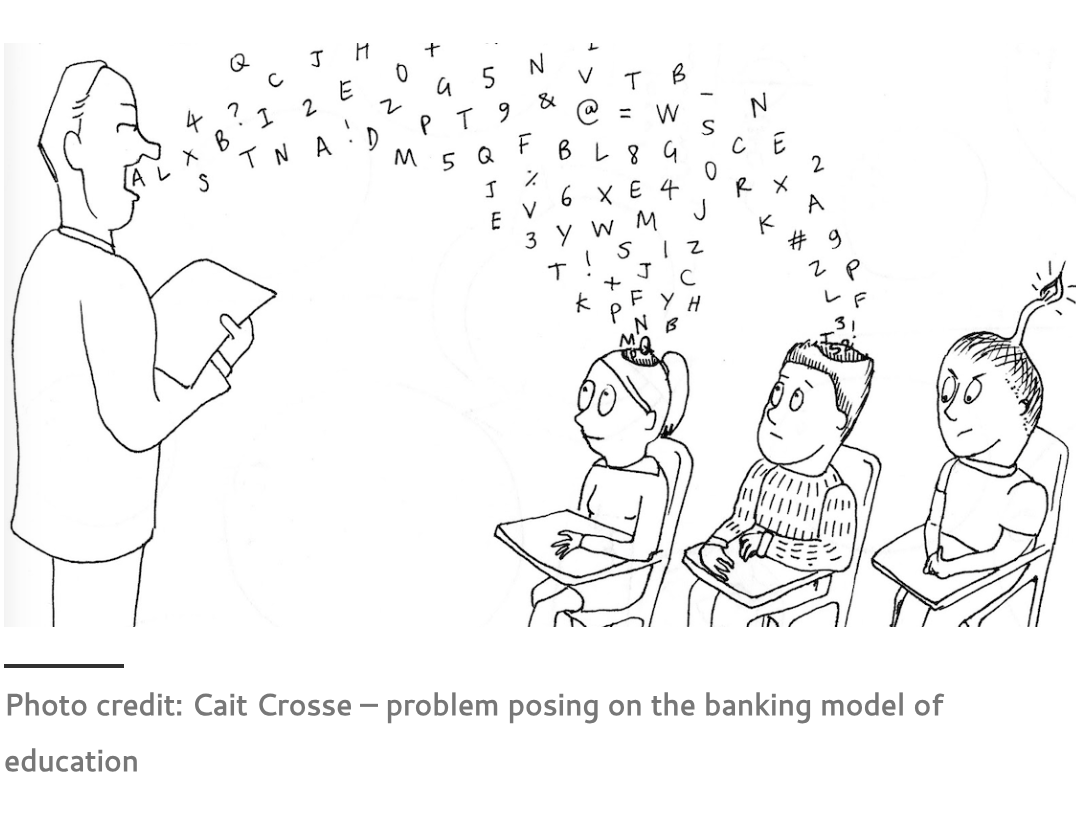
Freire vehemently argues against the banking model of education, or when the impetus of control comes from the teacher and knowledge is just being deposited into the child’s empty mind. According to Freire, creating a hierarchical power structure mirrors the systems of control that are in place within the larger society and creates students (and citizens) who are simply passive participants in learning, stripped of their agency and unable to develop a critical consciousness which is what truly allows people the ability to think freely and create social change. To dismantle this oppressive hierarchy, Freire advocated for “Problem-Posing Education”, which shifted the classroom dynamic from passive compliance to one of active liberation.
Recently, I started supporting literacy at a Reggio-Emilia Italian Immersion school which has me considering my foundational beliefs around education and how these beliefs can and do translate into my day to day one on one intervention work. Reggio-Emilia philosophy is deeply rooted in the belief that education should create agency for the individual. Through this sense of agency, young students learn the tenants of democracy as well as social justice, knowing that they have the power to make changes in their world. It arose after WW2 in Italy as a counter to the fascist regime that Italians suffered through for more than 20 years. In Reggio Emilia, children guide the learning and teachers respond and move with questions presented by students.
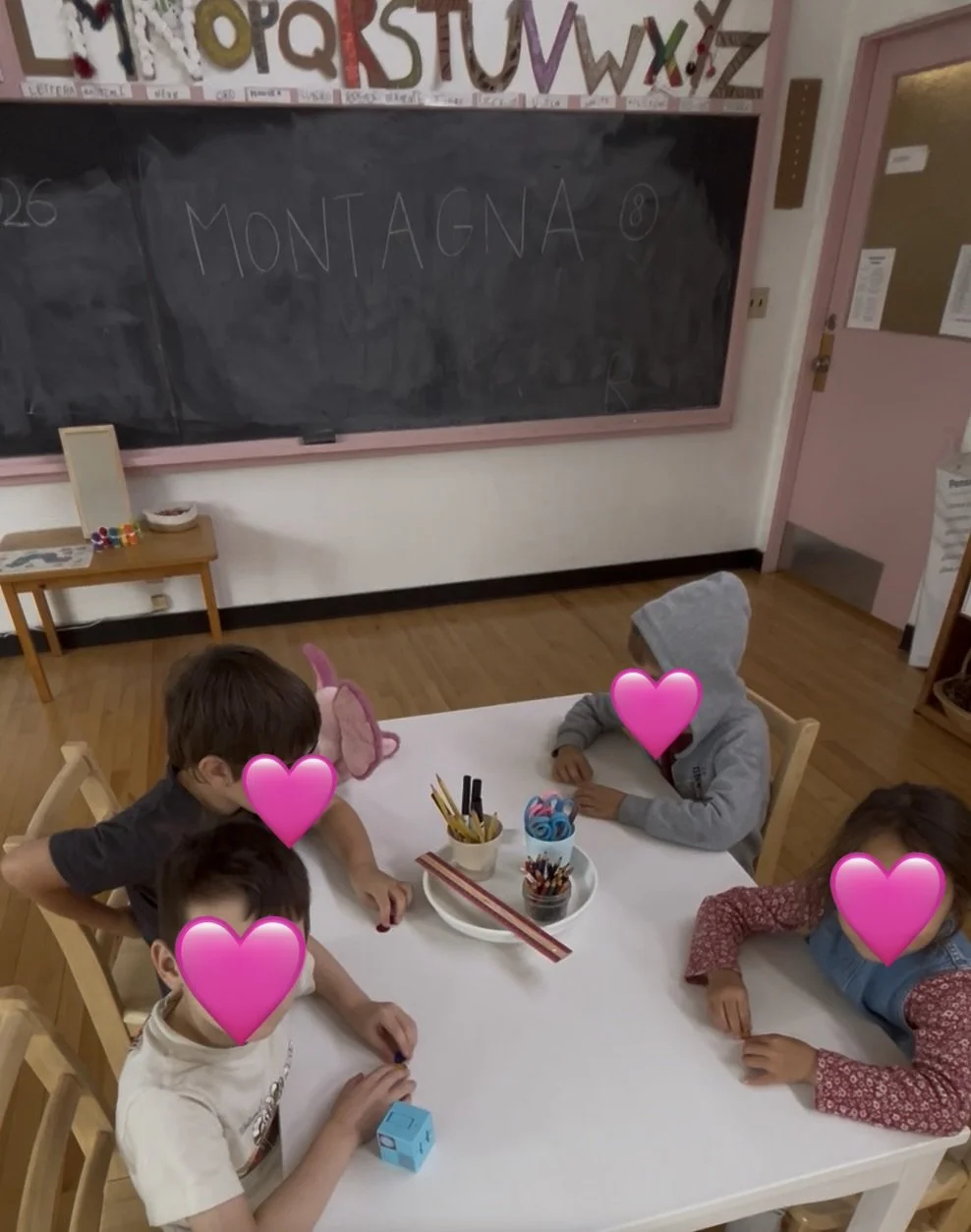
Kindergarteners at Studio Lingua Reggio Emilia School
As I reflect on these philosophies and attempt to tie them back to my own current reality as an interventionist, one thing that is extremely clear is that when supporting students with learning challenges, we must be explicit and systematic to help them accurately learn the material. The dynamic at first glance seems centered squarely within a banking model of education. When considering this, it’s important to keep Cognitive Load theory in mind. Have you heard of this before? This theory is new to me in name, but connects well to the ideas I’m contemplating. The idea is that if a student has not mastered foundational skills (ie. phonics, multiplication facts) to the point of automaticity their working memory becomes overloaded just trying to process the basics. Once foundational skills are automatic for a learner, this frees up space for higher order thinking and problem solving. So, the convergence within that intersection of learning foundational skills and developing critical thinking shouldn’t be overlooked.
As a responsive instructor with a level of critical consciousness myself, there are also other aspects of our work together that feel like a co-creation of understanding and meaning. Students themselves are the ones with the light bulb moments of understanding and I, as the careful observer of their learning, am also able to learn so much, adjust and change as I see what is happening for my student.
Another way I see intervention work connecting to these philosophies is through metacognition. I am helping my students to develop the ability to slow down and think about their thinking, their new understandings, as well as their mistakes as we work together. When you understand your own thinking and consider the processes that you’re taking to come to different conclusions, you are processing on a deeper and more critical level and this is what education is about. It liberates you to be able to, based on previous understanding and learning, truly think for yourself, making educated decisions that ultimately allow for change within the wider world. Metacognition is the foundation for critical thinking because when you are able to think about your own thinking, you also begin to critically analyze the world around you.
What I’ve realized is that when it comes to foundational skills, there is a level of “banking” knowledge (direct instruction) for students to get access to specific skills in a targeted way. I would argue that this middle area also must take into account the relationship between the student and instructor and the co-creation of learning and understanding within this partnership while working toward a shared goal. When this relationship is made visible, we are able to use metacognition ourselves and see the impact of our work from a wider lens. The truth is, “education doesn’t change the world. Education changes people. People change the world” (Freire)
https://www.globalmetacognition.com/post/metacognition-critical-thinking-what-s-the-connection
https://www.sciencedirect.com/science/article/abs/pii/S187118712400110X